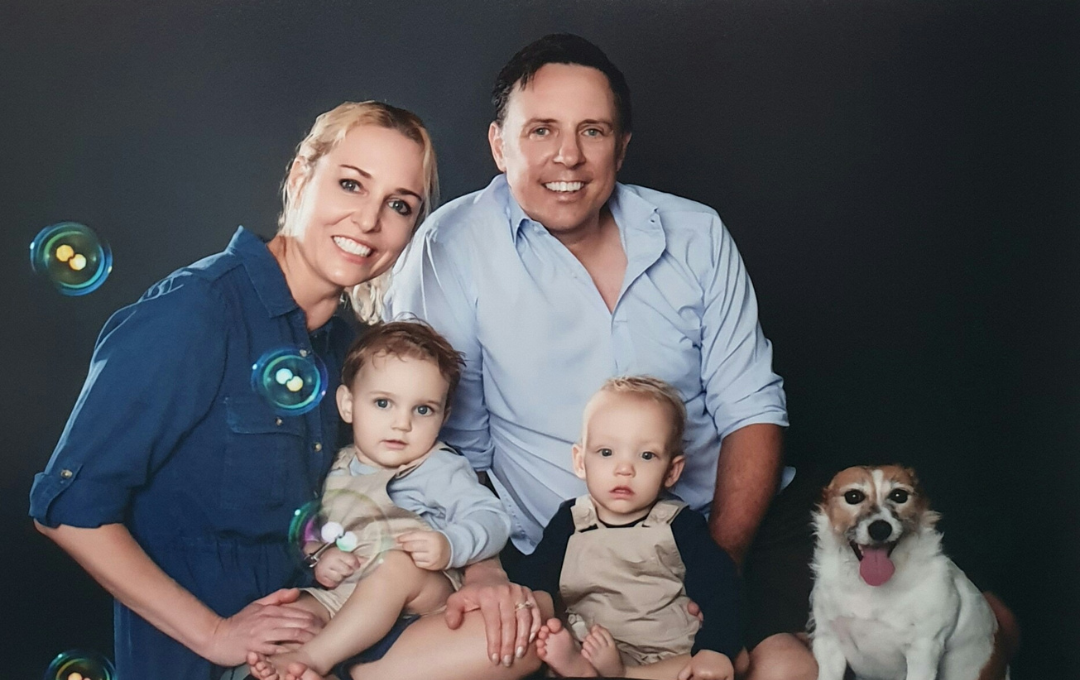
Once a painful reminder, Mother’s Day is now a celebration of resilience and hope for Amanda Webb. After battling cervical cancer and navigating the complex path of surrogacy, she defied the odds to welcome two sons—proof that perseverance and medical advances can make dreams come true.
From shock to joy: Amanda’s journey to motherhood
Mother’s Day used to be a painful reminder for Amanda Webb and her husband Ryan, who longed to start a family but faced heartbreak after heartbreak. Today, Amanda celebrates the day with gratitude, surrounded by her two sons and full of appreciation for the medical advances and people who helped make her dream of motherhood come true.
A shock diagnosis
In their thirties, Amanda and Ryan decided to try for a baby. As part of her pre-conception care in early 2012, Amanda underwent routine tests, including a cervical cancer screening. Having always considered herself healthy, Amanda wasn’t expecting bad news.
“I was fit, on top of my health. I had some bleeding between periods, but my GP thought it was hormonal,” Amanda recalled. But this time, the test results were different. The concerned look on her doctor’s face was the first sign that something was wrong. A biopsy followed, and the devastating news came while Amanda was at work: she had stage 1b cervical cancer.
Amanda was referred to gynaecological oncologist and Cherish Foundation Founder Professor Andreas Obermair. He laid out her options, including a hysterectomy or a radical trachelectomy, which would remove her cervix but leave her uterus intact. Amanda wanted children, so she chose the fertility-preserving procedure.
She consulted a fertility specialist, but due to the risk of spreading cancer, they decided not to proceed with egg preservation before beginning cancer treatment. Amanda began chemotherapy to shrink the 2.5 cm tumour, enduring weekly treatments to speed up the process. “Chemo was brutal. I worked through it but stopped teaching exercise classes. The side effects, menopause symptoms, and losing my hair—it was overwhelming,” she said.
By May 2012, the tumour had shrunk, and Professor Obermair performed the complex surgery, only the sixth of its kind he had done. Post-op results showed no remaining cancer, and her lymph nodes were clear. Amanda began recovery and, 18 months later, was ready to try again for a baby.
Back with her specialist, Amanda was told she likely couldn’t carry a child to term after her surgery. Returning to her fertility team, who consulted Professor Obermair before starting IVF, the couple began transferring embryos in 2013, but none of them took. By late 2014, they were told there was less than a 2% chance that Amanda could conceive or sustain a pregnancy.
Determined to become parents, Amanda and Ryan explored international surrogacy. In India, they created five embryos before a sudden surrogacy ban halted their plans. They moved the embryos to Nepal, but transfers there failed, and Nepal closed its doors too.
In Brisbane, at a surrogacy conference, they were introduced to a closed online Australian surrogacy group. A willing and generous surrogate offered to carry a baby for them three years later in 2018. The surrogacy process included extensive counselling, legal agreements, and fertility planning. Amanda tried one final egg retrieval, but the embryos were not viable. Eventually, their surrogate offered to donate her own eggs. On the fifth IVF cycle, using a natural approach without fertility drugs, they received the long-awaited news: they were having a baby!
A surprising twist
While waiting for the surrogate’s six-week scan, Amanda wasn’t feeling well. She was worried the cancer had returned or that she was in early menopause. Despite COVID-19 concerns, she saw her GP, who ordered blood tests and an ultrasound. At the scan, the sonographer surprised Amanda by revealing a 13-week-old baby on the screen. “I burst into tears. I couldn’t believe it,” Amanda said. At age 41, after years without birth control and all but giving up on her body, she was pregnant.
With one baby growing via surrogacy and another in Amanda’s womb, the couple was overwhelmed with joy—and anxiety. Amanda’s pregnancy went smoothly until a 28-week appointment in July 2020, when high blood pressure raised alarms. An emergency c-section was prepped but cancelled when the baby’s heart rate stabilised. Two days later, Amanda’s waters broke. Baby Ashton was born prematurely at 1.1 kg and spent seventy days in NCCU.
Meanwhile, their surrogate continued her pregnancy, and Amanda and Ryan attended her appointments too. In November 2020, full-term baby Brodie was born, weighing 3.5 kg. Soon, both boys were home, completing Amanda and Ryan’s extraordinary family.
Amanda reflects on their long and complicated journey with immense gratitude. “We are so lucky to have two amazing boys, each with a beautiful story about how they came into the world. The stars aligned. Our boys wouldn’t be here without the incredible advances in medicine and the generosity of so many people,” she said. From cancer survivor to mother of two, Amanda’s story is a powerful testament to resilience, medical research, and love.
If you would like to ask a question about fundraising or give us some feedback, please contact us via the form and let’s chat.
Alternatively, please contact Amy Hyslop, Fundraising and Development Manager on 0488 333 723 or email fundraising@cherish.org.au
You can also direct message us on Facebook, Instagram or Twitter.
If you need professional, confidential support about a gynaecological cancer diagnosis or treatment, please call Cancer Council’s free service on 13 11 20.
Cherish Women’s Cancer Foundation | Registered as Gynaecological Cancer Foundation Ltd | ABN 86 158 553 229

Cherish Women’s Cancer Foundation © 2026 | Developed by